The short answer
Benches take a low-resin timber that conducts heat poorly — usually aspen, alder or thermally treated softwood. Spruce and pine are fine for wall and ceiling panelling, but being resinous they do not belong on a seating surface. Dense hardwood and any exposed metal you can touch are out, because they burn.
What to know before your first visit
- The rule for seating: low resin, poor heat conduction.
- Aspen, alder and thermally treated softwood are the usual bench timbers.
- Pine and spruce belong on walls, not benches — resin weeps in the heat.
- Any bare metal at bench height is a risk: it heats faster than skin tolerates.
Two properties everything follows from
Choosing sauna timber is not a matter of taste but of two physical properties. The first is thermal conductivity: the worse a material conducts heat, the cooler it feels at the same temperature. That is why a wooden bench and a metal nail feel like entirely different things at 90 °C, although both are at 90 °C.
The second is resin content. In heat, resin softens, seeps to the surface and sticks to skin and towels. It is not dangerous but it is unpleasant, and it does not stop after the first summer.
The whole choice follows from those two. A seating surface needs a wood that conducts heat poorly and does not weep. A wall only needs one that does not weep at eye level.
Benches: aspen, alder or thermally treated
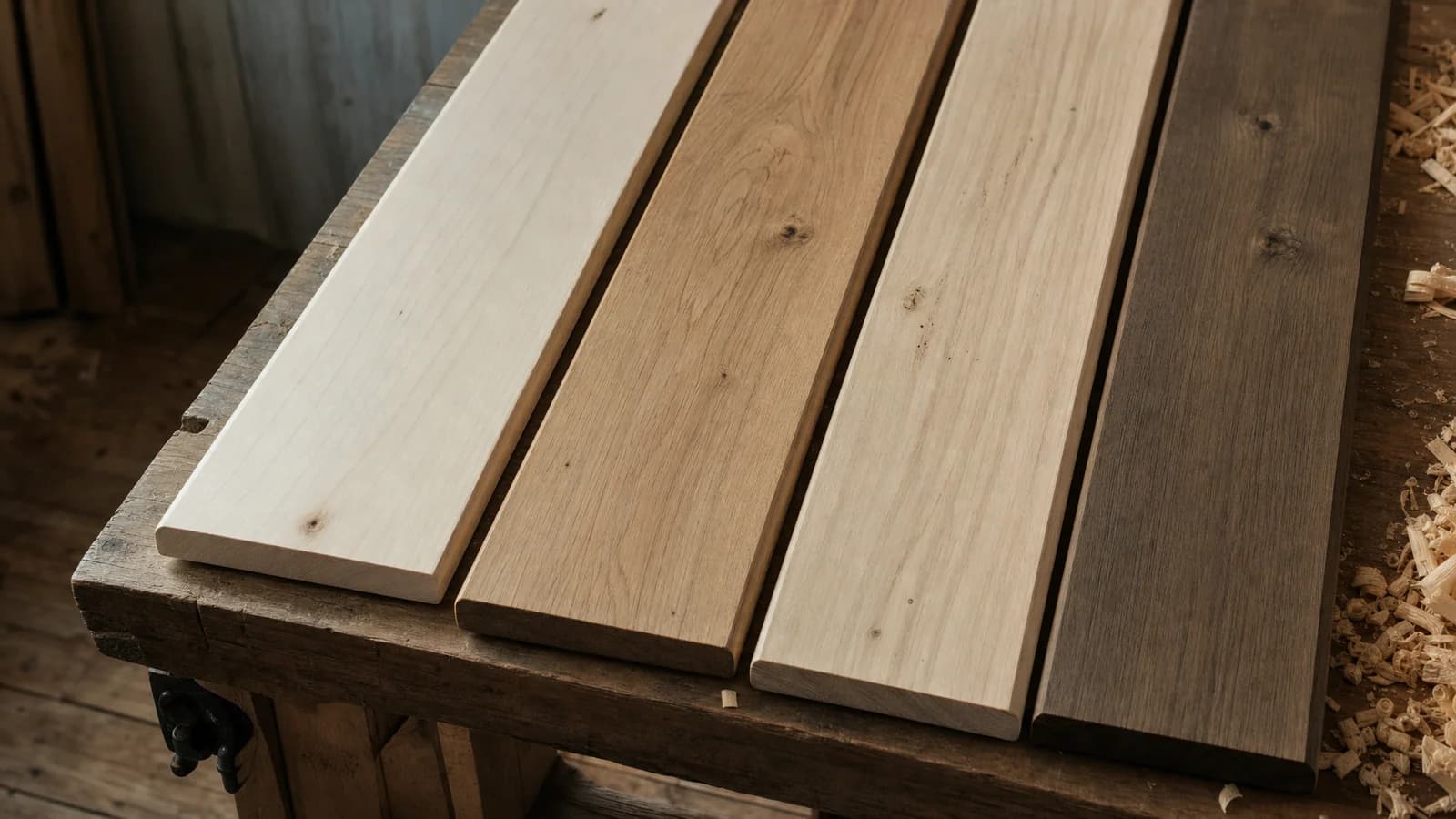
The usual bench timbers in Finland are aspen and alder. Both are low in resin and soft, and both stay tolerably cool in the heat. Aspen is pale and even; alder is a warmer brown.
The third option is thermally treated softwood. The treatment heats the timber to a high temperature, which drives off much of the resin and reduces movement. The colour darkens and the wood becomes more brittle, but as a bench it works.
Dense hardwood — oak, ash and the like — does not belong on a bench even though it would last. Dense wood conducts heat better and feels hotter than soft wood at the same temperature.
Walls and ceiling: a looser rule
Wall and ceiling panelling allows a wider range, because nobody sits on it. Spruce is common and works well; pine is more resinous and can weep from knots, showing as dark droplets.
Aspen and alder are used on walls too, usually where a consistent look with the benches is wanted. Thermally treated panelling gives the dark tone favoured in modern saunas.
One place is an exception: the backrest, and anything leaned on or held, follows the bench rule rather than the wall rule. The same goes for rails and steps.
Metal, fixings and finishes
Screws and nails in a bench are always sunk below the surface and plugged, or the bench is fixed from underneath. An exposed metal fixing in a bench surface heats far faster than the wood around it and is the commonest cause of small burns in a sauna.
Nothing goes inside the heater's clearance distances without the manufacturer's instructions. Those measurements are in the heater's installation guide and they apply to all structure.[1]
Seating surfaces are not varnished or painted. Untreated wood in a sauna is a choice rather than an economy, and the reason is the same as in bench washing: a film sticks to skin when hot and stops the wood drying.[2]
Practical answers
First-visit questions
Which wood is used for sauna benches?
One low in resin that conducts heat poorly: usually aspen, alder or thermally treated softwood. Pine and spruce are not suitable for seating.
Can pine be used for sauna panelling?
On walls and ceilings yes, though it can weep resin from knots. It does not belong on benches.
Why is dense hardwood wrong for benches?
Dense wood conducts heat better than soft wood, so it feels hotter at the same temperature.
Can sauna benches be varnished?
Not the seating surface. Film-forming products stick to skin when hot and stop the wood drying.
Editorial review
Sources
- Suomen SaunaseuraThe sauna heater
- Suomen SaunaseuraAbout sauna hygiene